
The Magic of Storytelling: How Sol and Luna Teach Kids About Nature’s Balance
Storytelling is a powerful way to introduce complex ideas to children using vibrant characters and creative concepts and themes. Stories engage children in ways no textbooks often can’t. One example is the story of Sol and Luna by Michael D. Ragland. In this delightful tale, the characters of Sol, the sun, and Luna, the moon, entertain children and introduce children to the natural cycles of day and night and the balance in nature. The story of Sol and Luna reveals the magic of nature’s harmony and teaches kids important lessons about balance.
The Story of Sol and Luna
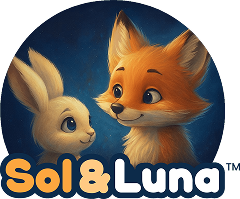
Sol and Luna are two contrasting yet complementary characters. Sol is a bright and energetic fox who represents the sun. Luna is a gentle and calm rabbit who represents the moon. Sol works tirelessly each day, bringing warmth and energy to the world. Luna. appears at night and creates waves in a pond which represents the seas. Together they care for a garden that represents the world.
While their roles are very different, the way Sol and Luna work together demonstrates a subtle but profound truth: everything in nature operates in balance. The sun needs the moon, and the moon needs the sun, just as day needs night and night needs day. The story of Sol and Luna isn’t just a whimsical adventure; it’s a quiet celebration of the balance that exists within nature.
Understanding the Natural Cycle of Day and Night
From the moment we are born, we experience the rhythmic passage of time: the rising and setting of the sun, the darkening of the sky as the moon rises, and the changing of the seasons. Yet, many young children often find it hard to grasp the concept of time as it relates to nature’s patterns. This is where the beauty of storytelling comes into play.
In Sol and Luna, Ragland brings the natural cycle of day and night to life in a way that is simple yet powerful. By personifying the sun and moon as two distinct characters, children can easily understand the roles they play in the world. Sol, with his fiery energy, represents the sun’s warmth
and light, while Luna, with her gentle glow, represents the calming, peaceful energy of the moon. Through their actions—Sol tending to the plants during the day and Luna watering them at night— children begin to see the roles these celestial bodies play in nurturing the world around them.
This is an important lesson for young readers. The story shows them that both day and night are essential. Neither one is more important than the other. They are interdependent, working together to create a balanced, harmonious world. Just as Sol and Luna each contribute in their own way, the story helps children realize that balance in nature requires all elements to work in unison.
The Importance of Balance in Nature
One of the core themes of Sol and Luna is balance. Balance is at the heart of nature, from the delicate ecosystems that depend on each other to the grander cycles of life, death, and rebirth. By using the characters of Sol and Luna, Ragland effortlessly demonstrates the significance of this balance in a way that children can understand.
Consider how Sol, representing the sun, brings light, warmth, and energy to the garden. Without the sun, life would cease to exist. Yet, Luna, who comes out when the sun sets, also plays a vital role. While Sol’s energy nourishes the plants during the day, Luna’s calm, quiet presence allows them to rest and rejuvenate during the night. This contrast between light and darkness is essential to the life cycle.
Moreover, the book suggests that even though Sol and Luna’s duties appear to be opposite, they are complementary. This teaches children a fundamental lesson: in nature, different elements may appear to be opposites, but they work together to maintain balance. Whether it’s the sun and moon, or other natural forces like air and water, animals and plants, all of nature’s components must coexist in harmony.
Through this simple yet profound tale, children learn that balance is not about everything being the same—it’s about embracing differences and recognizing that each element plays a vital role.
The Power of Rest and Activity
Another subtle lesson embedded within Sol and Luna is the importance of rest alongside activity. Throughout the story, Sol is busy during the day, racing around the garden, while Luna works quietly at night, nourishing the plants and animals with her gentle presence. But it is Luna’s sleep during the day, and Sol’s rest at night, that completes the cycle.
In today’s fast-paced world, children (and adults!) are often caught up in the rush of daily life. There’s a constant push to be active, to do more, and to accomplish tasks as quickly as possible. Sol and Luna remind us—and children—that rest is just as important as activity. Luna sleeps peacefully under the stars while Sol works, and Sol rests during the night, allowing Luna to take her turn. It’s this cycle of action and rest that keeps the garden thriving.
This concept of balancing work and rest is crucial for kids to learn at an early age. It teaches them that they don’t always have to be on the go. Rest is a necessary part of maintaining balance, health, and well-being.
The Enduring Legacy of Sol and Luna
Ultimately, Sol and Luna are a reminder of the delicate and beautiful balance that governs the natural world. Through the characters of Sol and Luna, Ragland encourages young readers to appreciate the interconnectedness of nature and to understand that every part of the world plays a role in maintaining harmony.
The story also provides a valuable metaphor for life. Just as Sol and Luna have distinct roles yet work together for the good of the garden, we, too, must recognize that our differences can help create a more balanced and harmonious world. Whether it’s in our relationships, our communities, or our ecosystems, balance is key to thriving.
So, the next time you gaze up at the sky and see the sun setting and the moon rising, remember the magic of Sol and Luna—and the lesson it teaches us all about the importance of balance in nature.